
Fireworks, Air Quality, and Lung Health
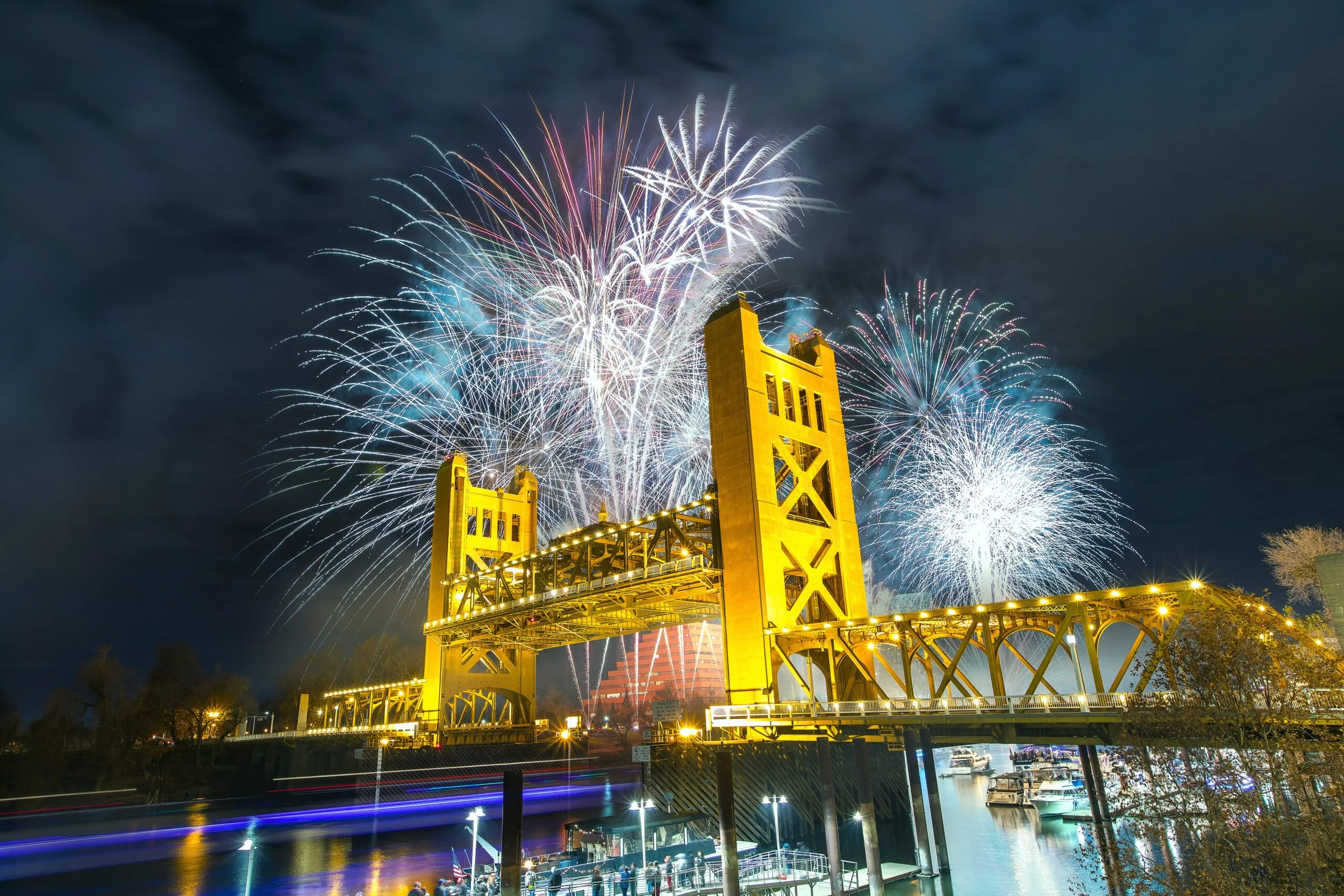
Figure 1: Downtown Grid[1]
More than 16,000 community fireworks shows are typically held across the United States to celebrate Independence Day.[2] This amounts to over three hundred million pounds of fireworks.[3] With the holiday just around the corner, it is important to take extra precautions to protect your lung health and air quality. The chemical components in fireworks and firework smoke negatively impact air quality, while also posing significant risks to lung health.
Fireworks and Lung Health
Firework smoke contains particulate matter, and when they explode, they release gases such as carbon dioxide, carbon monoxide, and sulfur dioxide, all of which pose significant risks to lung health.3 Fireworks also contain elevated levels of dangerous metals, including aluminum, manganese, and cadmium.3 These particles, gases, and metals are lung irritants, and when inhaled, they can worsen pre-existing lung conditions, cause difficulty breathing, headaches, coughing or wheezing, and asthma attacks.[3]
While these components are harmful to all, they pose a greater risk to pregnant individuals, children, older adults, and individuals with respiratory illnesses or asthma. Research shows that pollutant levels are at their highest between the hours of 9:00 PM and 10:00 PM on July 4th, but diminish by noon on July 5th.[4] Limiting your exposure to firework smoke during these hours can greatly lower your risk of complications.
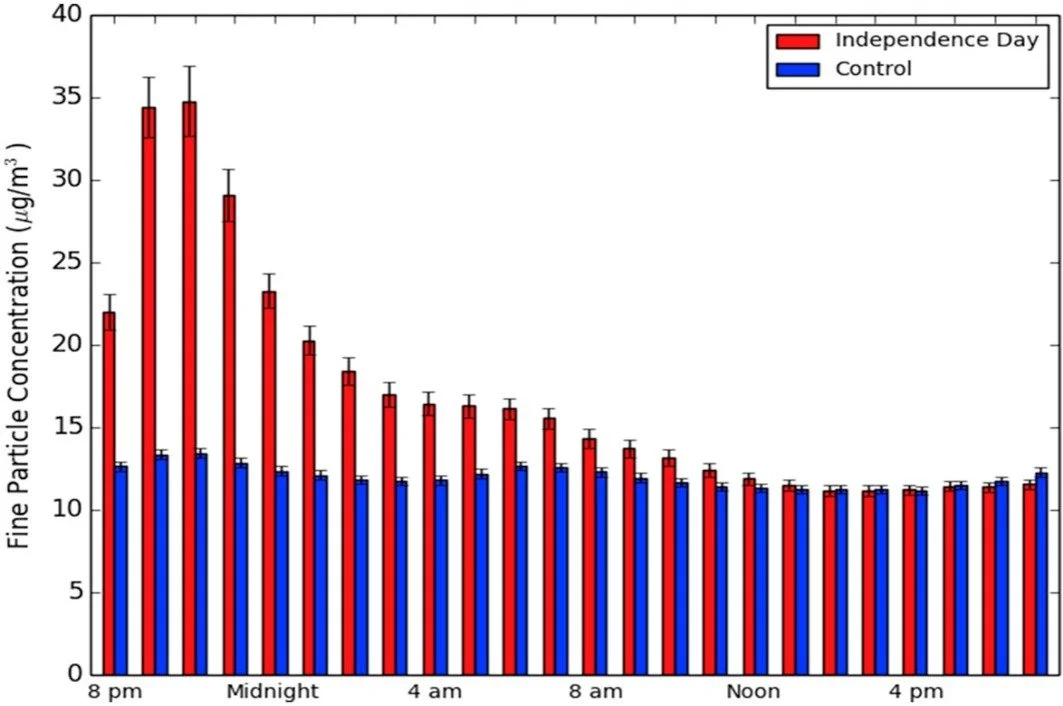
Figure 2: ScienceDirect[4]
Fireworks and Air Quality
Fireworks can significantly impact the air that we breathe. Research shows that air pollution levels increase by approximately 42% on the Fourth of July.4 While these pollution increases are short-lived and drastically diminish over the course of 48 hours, fireworks pose an even greater risk to long-term air quality impacts by igniting wildfires. The hot and dry conditions in early July create a dangerous opportunity for fires to ignite and spread over large areas. According to the Consumer Product Safety Commission 2024 Fireworks Report, over 19,500 fires are started by fireworks each year.[5] For example, in 2024, the Hawarden Fire in Riverside, California burned over five hundred acres as a result of an illegal firework.[6]
Wildfires release harmful pollutants, including black carbon, particulate matter, nitrogen oxides, and carbon monoxide, all of which pose risks to human health and air quality.[7] In addition, wildfire smoke travels for miles and can impact regional air quality for multiple days to several weeks, depending on weather conditions.[8] The persistence of these pollutants in the air for prolonged periods of time further poses a risk to sensitive individuals.

Figure 3: Rancho Cordova [11]
Staying Safe
Taking a few precautions this holiday can help reduce your risk of experiencing symptoms. The American Lung Association recommends staying upwind (meaning position yourself in the direction from which the wind is blowing[9]) from fireworks to limit exposure, staying indoors, monitoring the Air Quality Index, and paying close attention to symptoms if you have asthma or Chronic Obstructive Pulmonary Disease (COPD).[3]
This Independence Day is a wonderful opportunity to try something new and consider an activity that will keep the air clean and your lungs healthy! Drone shows are becoming more and more popular. The City of Elk Grove will hold a traditional fireworks show, followed by a drone light show, highlighting a cleaner alternative to traditional fireworks.[10] Additionally, Rancho Cordova hosts drone shows July 3-4th following the night of celebrations and concerts.[11] Consider cleaner alternatives to celebrate this Independence Day!
Sacramento Regional Transit is offering free transit services to those attending celebrations throughout the Sacramento region, including the fireworks and drone show in Elk Grove.[12] If choosing to celebrate the 4th of July at one of the festivities around the region, consider using public transportation to reduce vehicle emissions on a day that already impacts the air quality.

Figure 4: SacRT
While choosing how to celebrate Independence Day this year, keep your lung health and our air quality in mind and take extra precautions if you have asthma or a pre-existing respiratory illness. Most importantly, have fun and stay safe!
Authors: Paige Arnett, Sharon Kaur
[1]https://sacramento.downtowngrid.com/listings/july-4th-independence-day-fireworks
[2]https://www.americanpyro.com/pr-apa-recommends-must-see-displays
[3]https://www.lung.org/blog/fireworks-hidden-dangers
[4]https://www.sciencedirect.com/science/article/pii/S1352231015301369
[5]https://www.cpsc.gov/content/2023-Fireworks-Annual-Report
[6]https://www.fire.ca.gov/incidents/2024/7/21/hawarden-fire
[7]https://www.cleanairfund.org/news-item/wildfires-climate-change-and-air-pollution-a-vicious-cycle/
[8]https://wfca.com/wildfire-articles/how-far-can-wildfire-smoke-travel/
[9]https://dictionary.cambridge.org/us/dictionary/english/upwind
[10]https://elkgrove.gov/event/elk-grove-4th-july-celebration/july-04-2026-0500pm
[11]https://www.ranchocordovajuly4th.com/drones
[12]https://www.sacrt.com/celebrate-the-4th-of-july-with-free-rides-on-sacrt-to-local-events/
