
Keeping Your Lungs Healthy During Periods of Extreme Heat
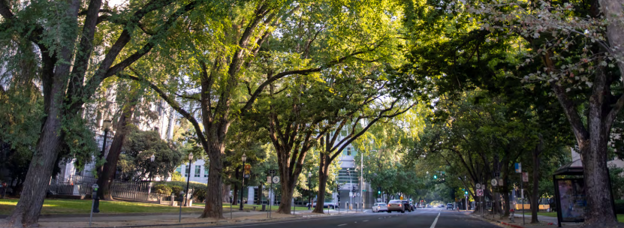
Image 1 City of Sacramento ONE HEAT7
Introduction
Extreme heat has become a regular occurrence driven by climate change and is predicted to persist in the future. The frequency, duration, and intensity of heatwaves only worsen over time due to climate change.[1] Generally, we know to watch out for signs of heat stroke and dehydration, but extreme heat also impacts our lungs. Heatwaves disproportionately impact underserved communities due to lack of shaded and cool areas (we will dive deeper into this later!). Let’s talk about what’s happening to your respiratory system during a heatwave, ways to protect yourself, and what we can do about it in the Sacramento region!
Extreme Heat + Lung Health
Obvious signs of heat stroke are discussed more frequently; however, our lungs take a hit during heatwaves. Extreme heat can worsen pre-existing conditions, causes lung damage, irritates airways, and more.
Here’s how extreme heat impacts your lungs:
Hot, humid air inflames airways and triggers asthma attacks.
It can make things worse for people with pre-existing conditions like Chronic Obstructive Pulmonary Disease (COPD). COPD is an inflammatory lung condition “most often caused by long-term exposure to irritating smoke, fumes, dust or chemicals.”[2]Extreme heat causes ozone levels to skyrocket, leading to inflammation in airways.
Stagnant, hot air traps pollutants, which damages lung tissue. The American Lung Association highlights how this worsens air quality and harms respiratory health.[3]Dehydration makes people more vulnerable to respiratory infections.
When you’re dehydrated, your body struggles to protect your lungs from viruses and bacteria, increasing the risk of infections like bronchitis or pneumonia.Extreme heat is often paired with worsening air quality, which triggers respiratory distress.
Even people without existing lung conditions can see negative side effects, but COPD is the second leading cause of death during heatwaves, showing just how dangerous this combination can be.Inhaling hot, dry air irritates airways directly.
Whether it’s dry heat or humidity, breathing in superheated air dries out your airways and makes it harder to clear mucus, leading to discomfort and potential health risks.[4]Exposure to high temperatures changes respiratory functions.
Past studies “have suggested that heat exposure could trigger a systemic inflammatory response and disrupt energy metabolism in the lung(s)[5].”
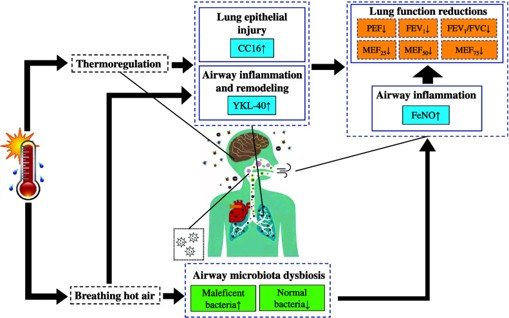
Image 2 National Library of Medicine4
How to Protect Your Respiratory System During Heatwaves
Heatwaves have become more common across many regions due to climate change and are defined as periods of at least two to three consecutive days of temperatures above 90°F. In the Sacramento region, residents have seen these heatwaves firsthand. As previously mentioned, heat strokes and dehydration are not the only results of extreme heat; higher temperatures can make it difficult for people with lung-related health issues to breathe comfortably.
Luckily, there are several ways to protect your lungs during periods of extreme heat:
1. Check the Air Quality Index (AQI) before heading outdoors. Hot days lead to poor air quality, especially when ozone levels are high. Review local air quality reports and limit time spent outdoors when pollution levels are unhealthy.
2. Keep medications with you. If you have asthma, COPD, or another respiratory condition, make sure your prescribed medications are readily accessible. Heat and poor air quality can trigger symptoms.
3. Stay hydrated. Drinking plenty of water can help your body regulate temperature and make it easier to breathe during hot weather.
4. Reduce outdoor exercise. Avoid hours when temperatures peak. Exercising causes an increased respiratory rate, and avoiding the outdoors can limit exposure to harmful pollutants. If possible, exercise indoors.
5. Find air-conditioned spaces during peak heat or take a cold shower. Fans do not cool body temperature down; it mimics a cold feeling due to airflow. Find ways to bring your temperature down when it is peak heat season.
6. Choose shaded pathways outdoors. Trees and shaded pathways can provide relief from direct sunlight, often resulting in lower temperatures. [6]
Call to action
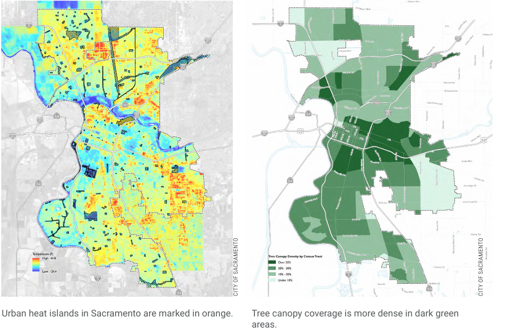
Image 3 City of Sacramento ONE HEAT7
While individual actions can help protect our lungs during a heatwave, addressing extreme heat at its source calls for community-wide solutions. The built environment is part of the problem. Outdoor spaces need to be shaded for folks to take a safer pathway that avoids direct sunlight. Urban heat island effects make neighborhoods measurably hotter. Many areas within the Sacramento Region lack the necessary shaded areas for a more bearable, healthier environment during the summer. To make strides in the right direction, Urban Land Institute (ULI) Sacramento is partnering with the City of Sacramento and Sacramento County to build more shaded areas within the region, especially in urban heat islands, throughout Sacramento. ULI Sacramento’s Technical Assistance Panel recommends treating trees as critical infrastructure, de-paving underused parking lots, planting micro-forests in dense urban areas, requiring shade in new construction (prioritizing playgrounds and pedestrian areas), and setting neighborhood-level canopy goals with real enforcement.[7]
To make projects like this successful, community-wide support is essential. To create safe play structures for the youth and safer walking paths when biking or walking, the community’s voice and involvement are key to successful implementation. Residents can volunteer for tree-planting events, advocate for shade policies at local meetings, and support initiatives like ULI Sacramento’s micro-forests. These proactive measures lead to a cooler and healthier region for everyone.
Conclusion
Climate change and extreme heat weather is a public health issue, directly impacting the respiratory system. It is imperative to take steps to protect yourself from the heat when outdoors during heatwaves. Keep any medication for asthma or COPD on you, stay hydrated, seek out shaded areas when the outdoors is unavoidable, and find ways to cool your temperature down this summer! Additionally, avoid going outside when the AQI is at high levels!
Heat mitigation needs to be prioritized, as climate change progressively increases. The partnership between the City of Sacramento, Sacramento County, and ULI Sacramento brings together different jurisdictions to prioritize shading throughout the region. Public support is needed for local green infrastructure to thrive. Green infrastructure naturally cools the environment, which results in a healthier environment for everyone.
Authors: Sharon Kaur, Kassandra Vega
[1] https://health.universityofcalifornia.edu/sites/default/files/2025-05/UCHealth_Resiliency_UCSD_Health_Extreme_Heat.pdf
[2]https://www.mayoclinic.org/diseases-conditions/copd/symptoms-causes/syc-20353679
[3]https://www.lung.org/clean-air/emergencies-and-natural-disasters/extreme-heat
[4]https://health.universityofcalifornia.edu/sites/default/files/2025-05/UCHealth_Resiliency_UCSD_Health_Extreme_Heat.pdf
[5]Heat Exposure Changes Lung Function, Biomarkers of Airway Injury, and Airway Microbiota: A Randomized, Crossover Trial - PMC
[6] https://www.lung.org/blog/asthma-heat-triggers
[7]https://www.cityofsacramento.gov/content/dam/portal/cdd/Planning/Long-Range/extreme-heat-mitigation/Sacramento%20Heat%20Mitigation%20TAP%20Final%20Report.pdf
